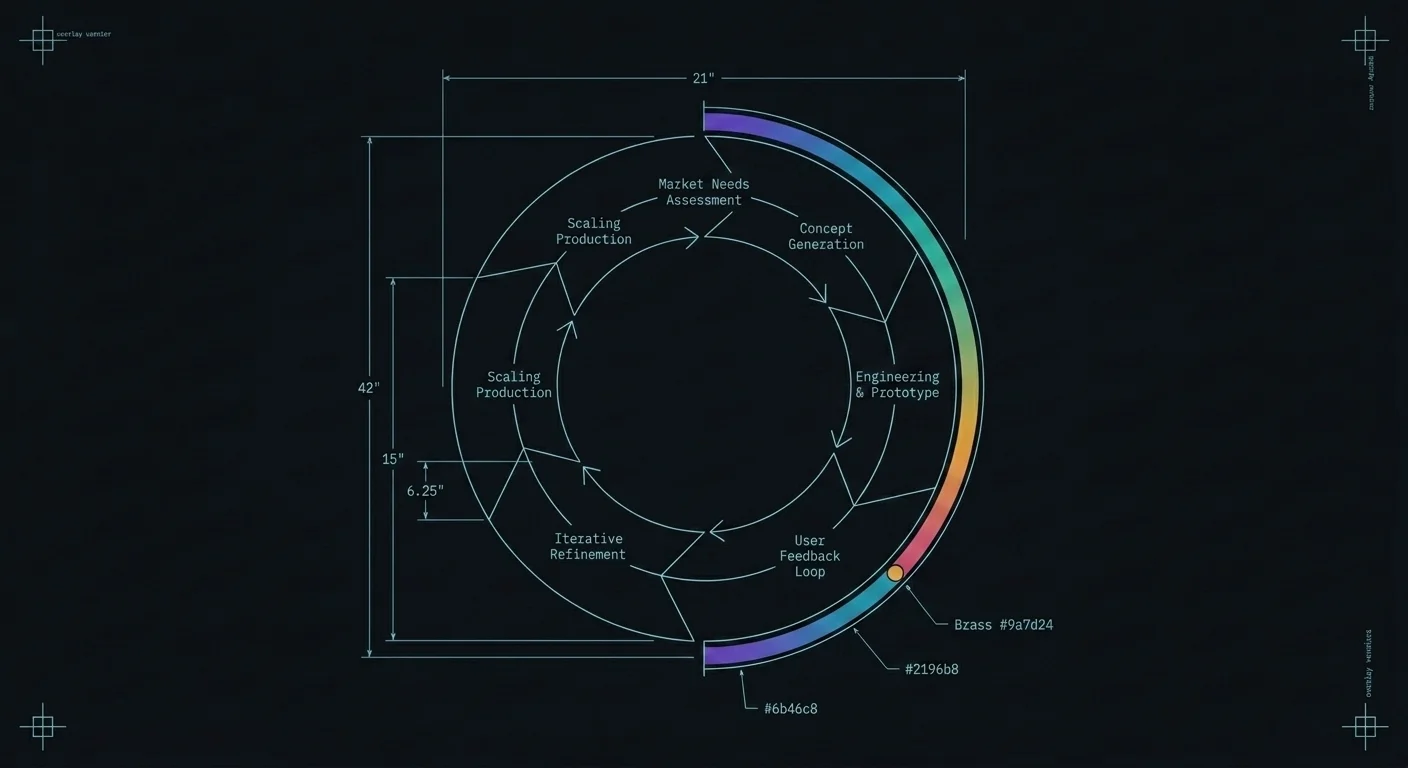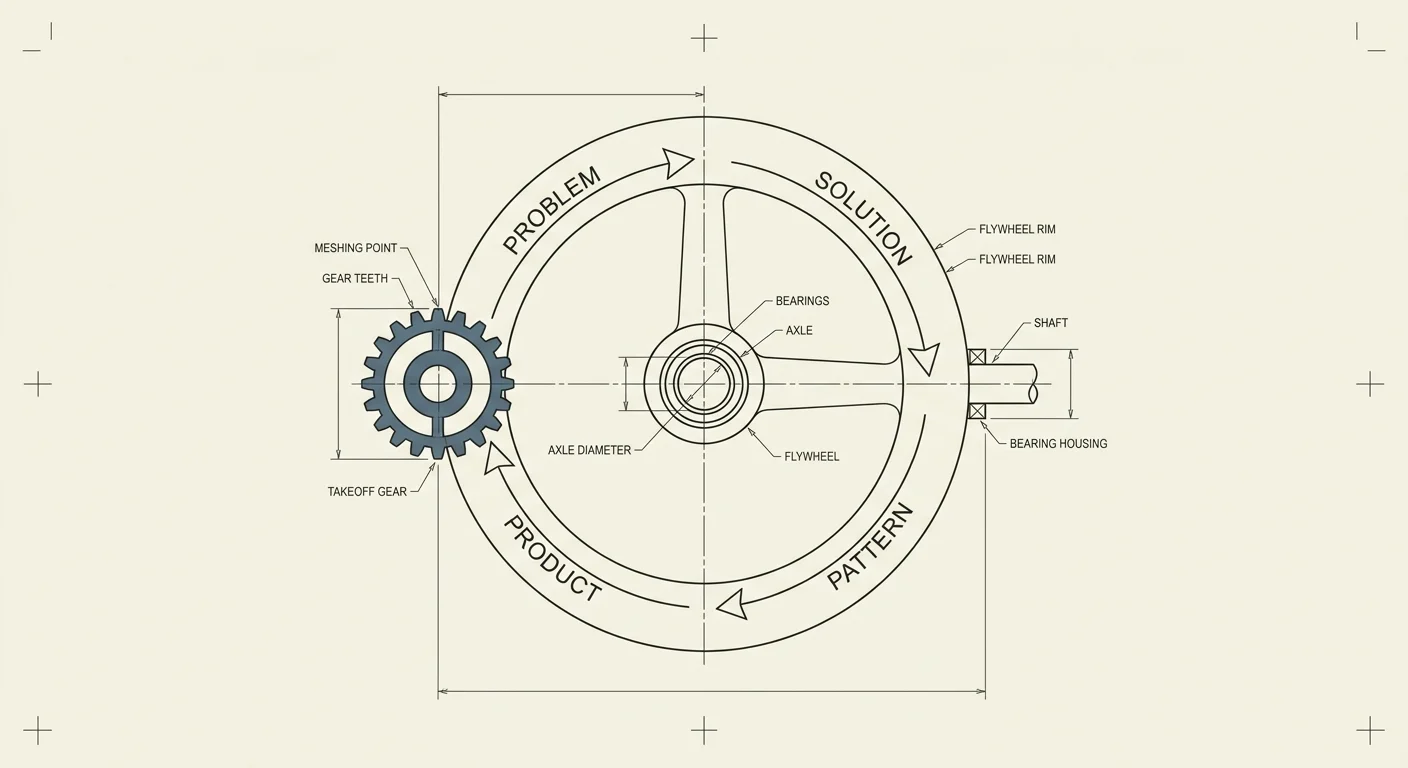
Most of our products did not start as products. They started as a client problem we were paid to solve — a film studio drowning in script coverage, a training firm with no map of its workforce's skills, a triage line that needed to scale without losing clinical rigor. We solve the specific problem, ship it, and watch what happens next.
When the same shape of problem shows up a third time, we stop rebuilding it by hand. We extract the durable core — the analysis engine, the evaluation harness, the voice pipeline — into something multi-tenant, configurable, and sellable on its own. The client engagement funds the R&D; the product captures the recurring value.

An AI platform for analysing scripts and long documents — run structured analysis modules, refine conversationally, and teach the system your house methodology so its judgment becomes yours.
The hard part: versioned, reproducible analysis pinned to a hash of its inputs, and a golden-corpus evaluation harness so quality is measurable, not a vibe.
An autonomous content fleet: multi-agent pipelines that research, write, illustrate, and publish to a live CMS on a cadence — with semantic deduplication so they don't repeat themselves.
The hard part: agent-to-agent fact-checking and embedding-based dedupe that let the fleet publish directly to a live CMS, unattended, without drifting off-brand.
A speaking-practice app that analyses how you actually sound — filler words, vocal tremor, pacing, hedging — not just what you said.
The hard part: real acoustic analysis via a Praat phonetics sidecar, and best-in-class voice vendors behind swappable interfaces.
A workforce-intelligence platform that interviews your people by AI voice, builds a skills inventory, finds the gaps, and tells you what to train and who to hire.
The hard part: turning a fluid voice interview into normalized, comparable skills data, and grounding recommendations in the customer's own course catalogue.
Analytics for the post-search era: measure how — and whether — large language models cite your brand, and why.
The hard part: turning 'do LLMs mention us?' into ~14 stable, comparable, formulaic metrics across non-deterministic models.
Turns a long, intimidating form into a natural conversation — fill it by talking or chatting, with a drag-and-drop builder behind it for whoever designs the form.
The hard part: keeping a free-flowing conversation and a partially-filled structured form in sync, bidirectionally, generated from the form definition rather than hard-coded.
AI-driven crisis-simulation training: a live, branching scenario run by an AI crisis-master that puts a leadership team through a realistic incident.
The hard part: stateful, multi-turn scenario orchestration that escalates believably instead of railroading participants.
A clinical triage assistant: a real-time voice front end talking to a patient, backed by a supervisor LLM that makes the triage decision against an established clinical protocol.
The hard part: separating a fast conversational voice layer from a slower, authoritative supervisor that owns the decision and the record.
RAG over meeting transcripts with cited answers — ask what was decided and get the passage that proves it. (Name provisional.)
The hard part: faithful retrieval with citations a reader can verify, over messy, unstructured transcript data.
Regulatory-document semantic search and RAG over large, unstructured regulatory corpora.
The hard part: faithful retrieval over long regulatory documents where a wrong or unsourced answer is worse than no answer.
Photo-to-nutrition food AI: point a camera at a meal and get a structured nutrition estimate.
The hard part: turning a single vision input into a defensible structured estimate rather than a confident guess.
Multi-model business-intelligence orchestration — route a question across models and reconcile the answers.
The hard part: deciding when an ensemble actually beats the best single model, and proving it.
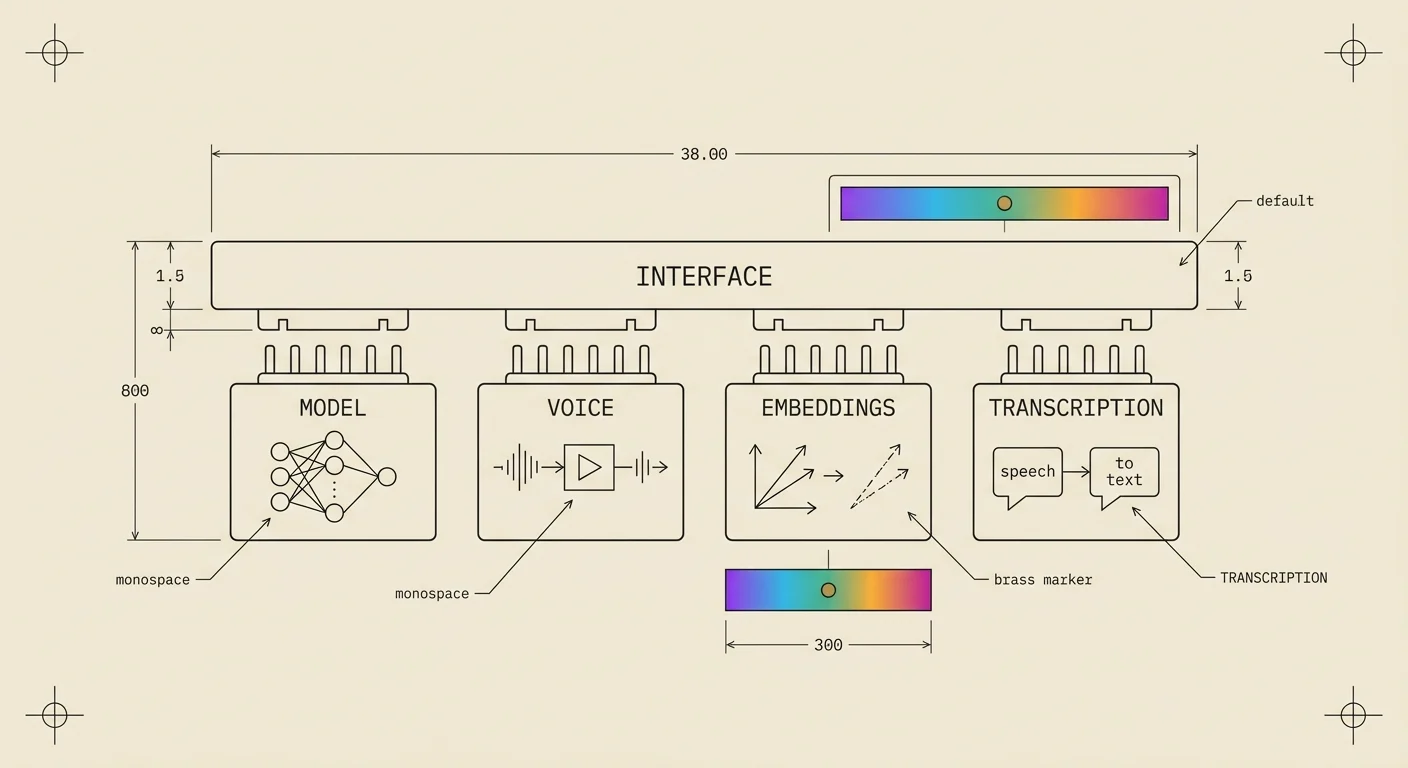
Alongside the product lines we ship and maintain a small set of Model Context Protocol (MCP) connectors that let AI assistants read and operate enterprise systems directly. They are plumbing, not headline products — but they are why several lines above can reach into a customer's existing systems without bespoke integration work each time.