Omnilogic Labs
// PRODUCT — SEMANTIC SIGNAL

Analytics for the post-search era.

Semantic Signal measures how — and whether — large language models cite your brand, and why. When a buyer asks an assistant "who are the best vendors for X," the answer either mentions you or it doesn't. Unlike classic search, there is no rank, no console, no signal telling you where you stand.

Semantic Signal is the console for that channel: a Generative Search Optimization platform that turns "do the models mention us?" into something you can diagnose and act on.

SPEC_ID: GSO-ANALYTICS // STATUS: IN BUILD // ~14 PROPRIETARY METRICS
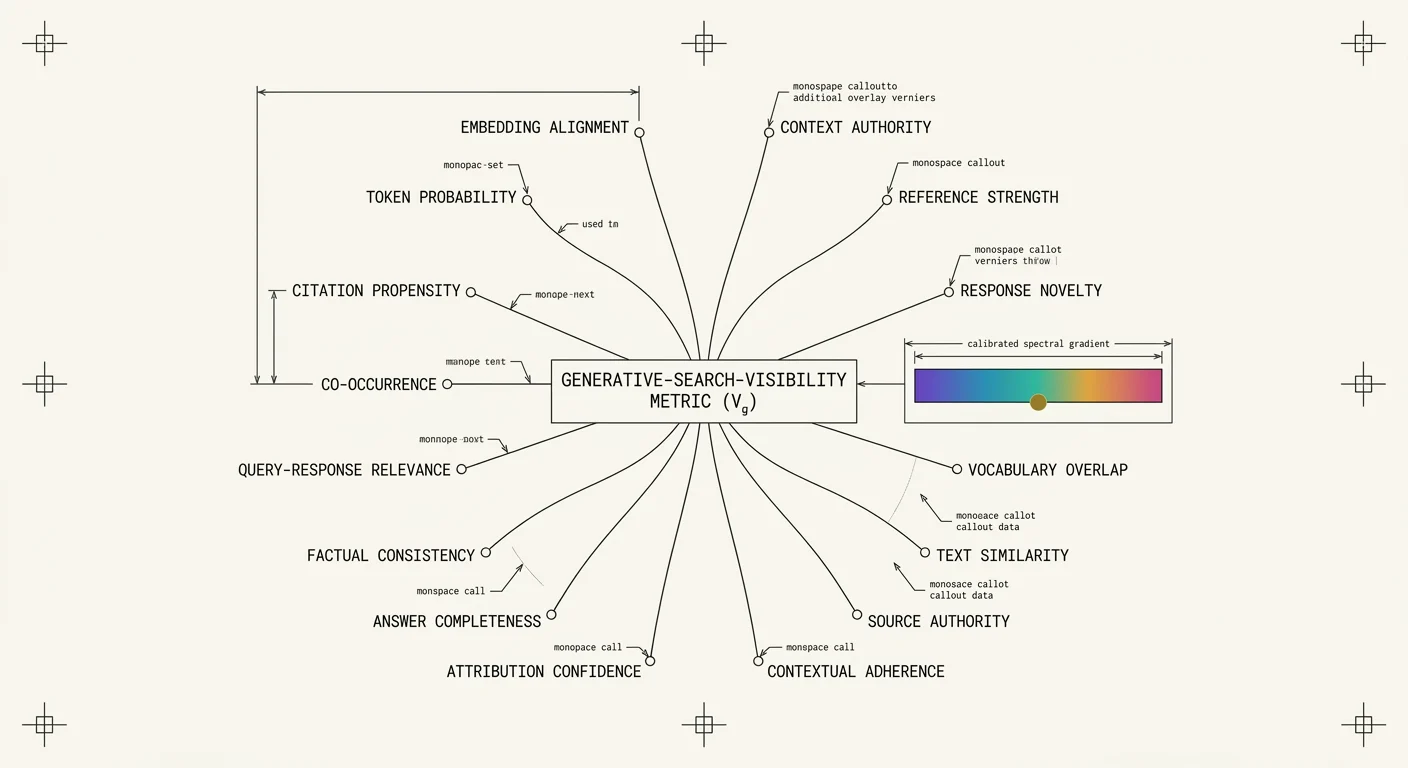
FIG. METRIC_DECOMPOSITION
REF: SS-00Fan-out of a single AI-visibility signal into roughly fourteen component metrics
01 // THE PROBLEM

Marketing is flying blind on the channel that's eating search.

A growing share of buying research now happens inside AI assistants rather than on a results page. The assistant's answer is the new shelf — and most brands have no idea whether they are on it.

Classic SEO gave you a rank, a console, and a feedback loop. The AI-answer channel gives you none of that: no position, no impressions, no clear reason you were cited or skipped. You can't optimize what you can't see.

REF: SS-01
// WHAT'S MISSING
  • No rank — there is no position to track in an AI answer.
  • No console — no first-party report of when you were cited.
  • No why — even when you appear, nothing explains the result.
  • No comparison — no read on how you stand against rivals.
REF: SS-01 // VISIBILITY IS NOT ONE NUMBER

02 // WHAT IT DOES

Decompose AI visibility into metrics you can diagnose.

Semantic Signal measures a brand's presence inside AI-generated answers: whether the models cite you, in what contexts, against which competitors, and what's driving the result. Instead of one opaque score, it surfaces a suite of roughly fourteen proprietary metrics — each defined by an explicit formula, not vibes — so "AI visibility" becomes diagnosable.

REF: SS-M01
join_inner

Embedding alignment

How closely your brand sits, in the model's own representation space, to the topics buyers ask about. Alignment-style measures show whether you are even in the neighborhood of the question.

REF: SS-M02
percent

Citation propensity

Token-probability-style measures of how likely a model is to name you when the question is in your space — turning a stochastic mention into a stable, trackable rate.

REF: SS-M03
groups

Competitive context

Who you co-occur with when the model answers — which rivals it reaches for first, and where you sit in that set. Visibility is relative; this is the relative read.

A free assessment tool is the entry point — a first read on where you stand. Deeper analytics and ongoing services sit behind it, for teams that need to watch the channel over time rather than glance at it once.

03 // WHO IT'S FOR

The marketing leader watching search slip into the answer box.

Semantic Signal is built for the marketing leader who already cares about search visibility and is starting to worry about the AI-answer channel — the one who can feel the ground moving and has no instrument for it yet.

It's horizontal: the channel matters to any brand whose buyers ask an assistant before they ask a salesperson. The first question it answers is the simplest and the hardest — when the model is asked about your category, does it know you turn the right knob, and does it turn yours?

// FITS
MARKETING ANALYTICSGSO / GEOBRAND VISIBILITYCOMPETITIVE INTELHORIZONTAL

04 // HOW IT WORKS

Probe the models. Stabilize the signal. Attribute the why.

REF: SS-H01
travel_explore

Probe systematically

Visibility is measured by querying models across a structured space of prompts and contexts — an experiment-design and automation problem as much as an analytics one. We sample, not guess.

REF: SS-H02
show_chart

Stabilize the metric

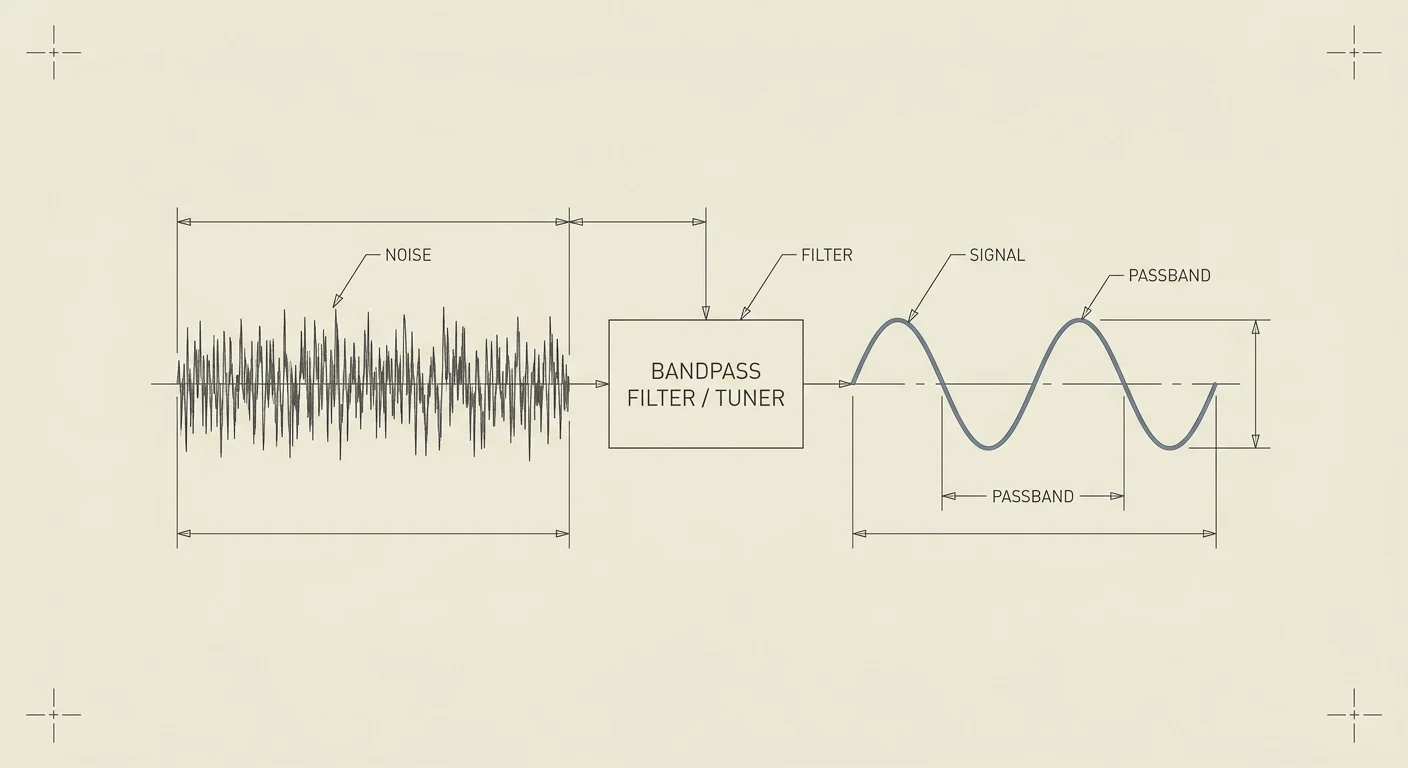
Model outputs are non-deterministic and prompt-sensitive. A measurement methodology turns noisy responses into metrics repeatable enough to track over time and compare across brands.

REF: SS-H03
account_tree

Attribute the cause

"You're under-cited" isn't actionable. The metric suite attributes the result to causes — alignment, probability, competitive context — so a team knows which knob to turn.

REF: SS-STACK
// STACK

Next.js and PostgreSQL on a containerized deployment, fronting a TypeScript automation-script system that drives the model-probing and metric computation. Each metric is a documented formula — the metric/formula spec is a first-class artifact, not an afterthought, which is what makes the numbers auditable rather than opaque.

STACK: NEXT.JS // POSTGRESQL // CONTAINERIZED // TS AUTOMATION SUITE

05 // THE HARD PART

Two differentiators worth the build.

First: stable, comparable metrics out of a non-deterministic system. Turning "do LLMs mention us?" into roughly fourteen measures that hold still enough to trend and benchmark — each backed by an explicit formula — is the work most tools skip.

Second: a why, not just a score. The suite is designed to decompose visibility into diagnosable causes, so the output is a set of knobs to turn rather than a single number to stare at.

  • Formulas, not vibes — every metric is explicitly defined.
  • Repeatable across time and comparable across brands.
  • Causal decomposition: which lever moves your visibility.
FIG. SIGNAL_FROM_NOISE
REF: SS-02Separating the true visibility signal from noisy, prompt-sensitive model outputs

06 // STATUS

In build — our wager on an emerging category.

Semantic Signal is in active build as a productized bet: a free assessment as the front door, SaaS tiers for ongoing measurement, and a services retainer for teams that want the channel managed. Generative Search Optimization is an emerging category, and this is the lab's wager on it.

The free assessment is the fastest way to see where you stand. If the channel matters to your category, the question isn't whether to measure it — it's how soon you start.

REF: SS-STATUS
STATUS: IN BUILD
MODEL: FREE ASSESSMENT → SAAS TIERS → SERVICES RETAINER
CATEGORY: GENERATIVE SEARCH OPTIMIZATION (GSO)
// NEXT

Find out whether the models are citing you — and why.

Tune to the right signal before the channel decides for you. Tell us your category and we'll show you where you stand in the AI-answer box.