Work · Platform development
Software that moves at the speed of its founders.
Adaptig ran its training business across around ten separate systems. We brought the core of it onto one platform in about three months while classes kept running, and built it so the people who run Adaptig can change their own software with Claude Code.
01
Bringing the business together.
About three months
Adaptig’s team had built its own apps with AI app builders, next to an off-the-shelf package for courses, certificates and billing. Each one did its job, but together they were around ten places to keep in step.
We brought the core of the business onto one platform in about three months, while classes kept running. The remaining systems move across in stages, and nothing the business does today is allowed to go missing on the way.
Moving onto one platform usually means every change waits for an engineer. We built it so the people who run Adaptig keep the freedom to change their own software, at the pace their ideas change.
02
Their software, theirs to change.


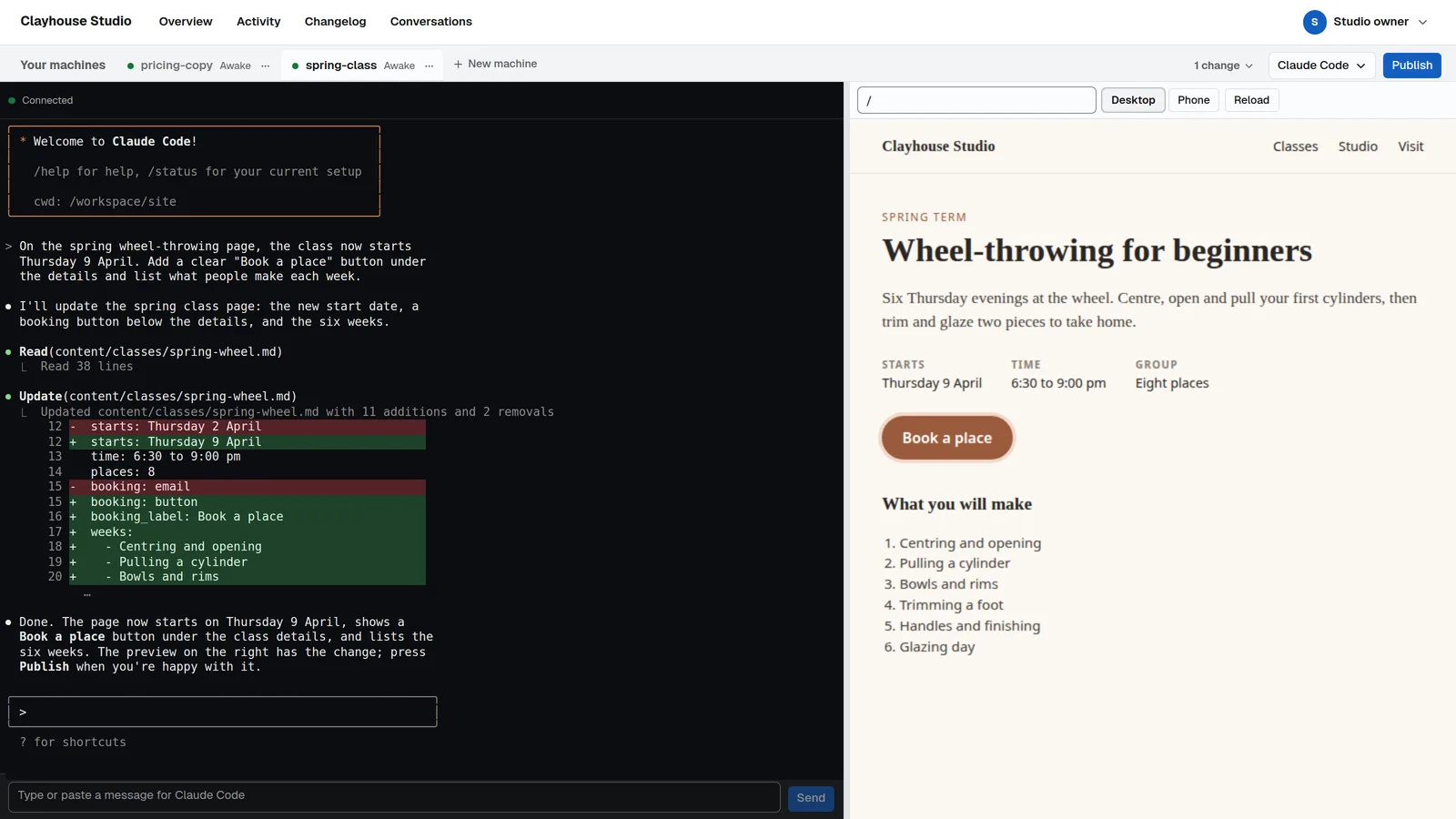
Claude Code is usually an engineer’s tool. We built it into a simple editor for people who do not write code: they describe a change in their own words, try it on a private copy of the site and watch it appear in a preview.
The people who run Adaptig change their own software this way today. The day before teaching a new cohort, the team behind the Shift programme redesigned the flow of its sessions, based on feedback from the previous cohort. The new session order went live.
03
Room to experiment. Checks before release.
That freedom rests on a base layer that is hard to break.
- A private copy for every change. Each change is made on its own copy of the site and its data, with real email and payments switched off, away from the live platform and its customers.
- Automatic checks first. A change cannot go live until the platform’s automatic checks pass, and Adaptig’s changes go through the same checks as ours.
- A person decides. A person chooses when a change goes live, and the last release can be undone.
Where this is going
Your next software change starts with you
Nearly a quarter of founders on Linear now open software changes themselves, up from 12% a year earlier. The people who run Adaptig already do the same, through an editor we built. What would your team change first?
30 October 2026: Replit lets non-engineers propose tested changes to existing software.
Replit’s changelogNeed software that keeps up with your business?
Tell us what keeps changing.