Omnilogic Labs

RESEARCH // GENERATIVE SEARCH OPTIMIZATION

Does the model name your brand — and can you prove why?

The post-search era is not coming. It is here. When a user asks an assistant a question, there is no results page to rank on — there is a synthesized answer, and either your brand is named inside it or it is not.

This thread is about turning that into something measurable. We call the discipline Generative Search Optimization, and the working thesis is that visibility inside a generated answer is not a coin flip — it is decomposable, instrumentable, and ultimately tunable: know which knob to turn.

SPEC_ID: GSO-RESEARCH // ~14-METRIC FRAMEWORK // MODEL-AGNOSTIC
FIG. VISIBILITY_DECOMPOSITION
REF: GEO-00A single visibility signal fanning out into a family of distinct generative-search metrics

01 // The question

Ranking was observable. Generation is not.

For twenty-five years, being visible meant ranking on a results page. A user typed a query, scanned ten blue links, and chose one. Search Engine Optimization was the discipline of influencing that ranking, and it was tractable because the mechanism was observable: you could see the page, see your position, and reason about why.

Generative answers break that model. The mechanism is no longer a ranking function over documents — it is a generation process over a model's learned representation of the world, conditioned on whatever the model retrieved at answer time.

So the research question is sharp and uncomfortable: how do you measure whether an LLM cites a brand, and — harder — why it does or does not? If the answer is synthesized rather than ranked, what are the levers, and how would you ever know you moved one?

The thesis behind GSO is that visibility inside a generative answer is measurable and decomposable. A model citing a brand is the product of three things: what the model encoded about the brand during training, what it can retrieve about the brand at inference, and how the prompt and competitive context steer generation.

Each of those is observable if you instrument it correctly. The firms who can measure the effect will own the category — exactly as measurement, not intuition, eventually defined SEO.

02 // The approach

Not one opaque score — a family of diagnostic metrics.

Rather than a single "visibility score," we decomposed visibility into roughly fourteen metrics, each isolating one mechanism. The point of the decomposition is diagnostic: a brand that is invisible because the model has weak embedding-level association needs a different intervention than one that loses a head-to-head against a competitor in the generation step.

REF: METRIC-01
hub

Embedding Alignment Score

How close the brand's owned content sits, in embedding space, to the queries and topics its customers actually ask about. Misalignment here means the model has no strong reason to associate you with the topic, regardless of how the question is phrased.

REF: METRIC-02
function

Token-Probability Analysis

When the model is steered toward the topic, how probable is the brand name as a continuation? This probes the model's prior — what it learned before any retrieval — and is the closest thing to a direct measurement of latent brand presence.

REF: METRIC-03
format_quote

Citation Propensity

Across a battery of realistic prompts, how often is the brand actually named or linked — and in what position relative to competitors. The end-to-end outcome the other metrics exist to explain.

REF: METRIC-04
compare_arrows

Competitive Co-occurrence & Substitution

When the brand does appear, who appears alongside it — and which competitor the model reaches for when the brand is absent. Visibility is relative, and substitution names your real rivals in the model's eyes.

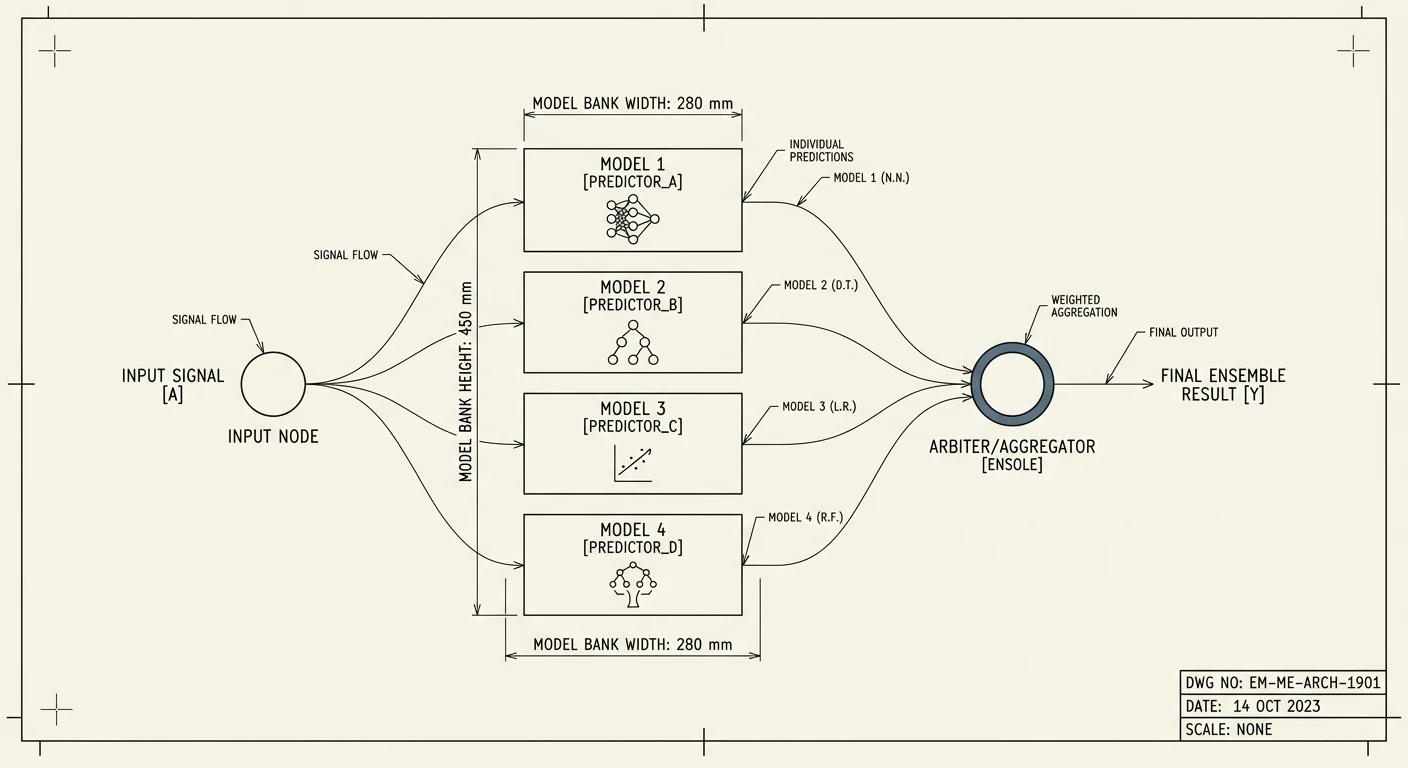
The remaining metrics extend the same logic across phrasing variation, retrieval grounding, sentiment of the mention, and stability under re-sampling. The framework is deliberately model-agnostic: the same battery runs against multiple frontier assistants, because a brand cares about visibility in the assistants its customers use — not in any one of them.

03 // What we built

FIG. MODEL_AGNOSTIC_BATTERY
REF: GEO-01An ensemble of frontier assistants probed by one shared metric battery

An analytics surface that points at the failing mechanism.

The framework lives behind an analytics surface that takes a domain and returns a visibility profile across the metric family — the breakdown that tells a marketing team not just that they are under-cited but which mechanism is failing. A free assessment serves as the entry point: type a domain, see where you stand.

  • Domain in, per-mechanism profile out — not a single number.
  • Prior vs. retrieval separated, so the advice is actionable.
  • Same battery across multiple frontier assistants.
  • Re-sampled, so confidence is earned rather than assumed.

04 // What we learned

Three findings that change the advice.

REF: FINDING-01

Visibility is not one number.

The decomposition itself is the most useful result. Two brands with identical citation rates can require opposite interventions, and only the per-mechanism metrics reveal that.

REF: FINDING-02

Prior and retrieval are different problems.

A brand can be strong in the training-time prior yet invisible at answer time because nothing current is retrievable — or the reverse. Conflating the two produces useless advice.

REF: FINDING-03

Stability matters.

Generative answers are sampled, not deterministic. A metric that is not measured across re-samples overstates its own confidence — the signal has to clear the noise floor.

05 // Status & where it is going

From measuring visibility to attributing it.

The work is heading toward a standing analytics product with a services layer for brands that want the diagnosis turned into a plan. The deeper research direction is causal: moving from measuring visibility to attributing changes in it to specific interventions, so that GSO becomes — like mature SEO before it — a discipline of evidence rather than folklore.

STATUS: ACTIVE BUILD // ANALYTICS SURFACE + FREE DOMAIN ASSESSMENT LIVE
GSOMODEL-AGNOSTICEMBEDDING ALIGNMENTSAMPLING STABILITY

06 // Connected work

Client-funded research, productized.

This thread feeds Semantic Signal, our generative-search-visibility product — the standing analytics surface where the metric family ships as a tool a marketing team can run themselves. It sits alongside the lab's other measurement-first work: eval corpora that make document analysis reproducible rather than a vibe, and multi-model orchestration that treats disagreement as a confidence signal.

The common thread is the lab posture — tune to the right signal, know which knob to turn. We would rather measure a mechanism than argue about an outcome.

// CROSS-LINKS
PRODUCT → SEMANTIC SIGNAL
RESEARCH → MULTI-MODEL ORCHESTRATION
WORK → DOCUMENT-INTELLIGENCE / EVAL CORPORA